
How Alchemy Works in alhimos: Brewing as the Whole Game
Last time I said I’d show alhimos one piece at a time. Let’s start with the heart of it: how brewing actually works. If this part doesn’t click, nothing else matters.
The alchemy table
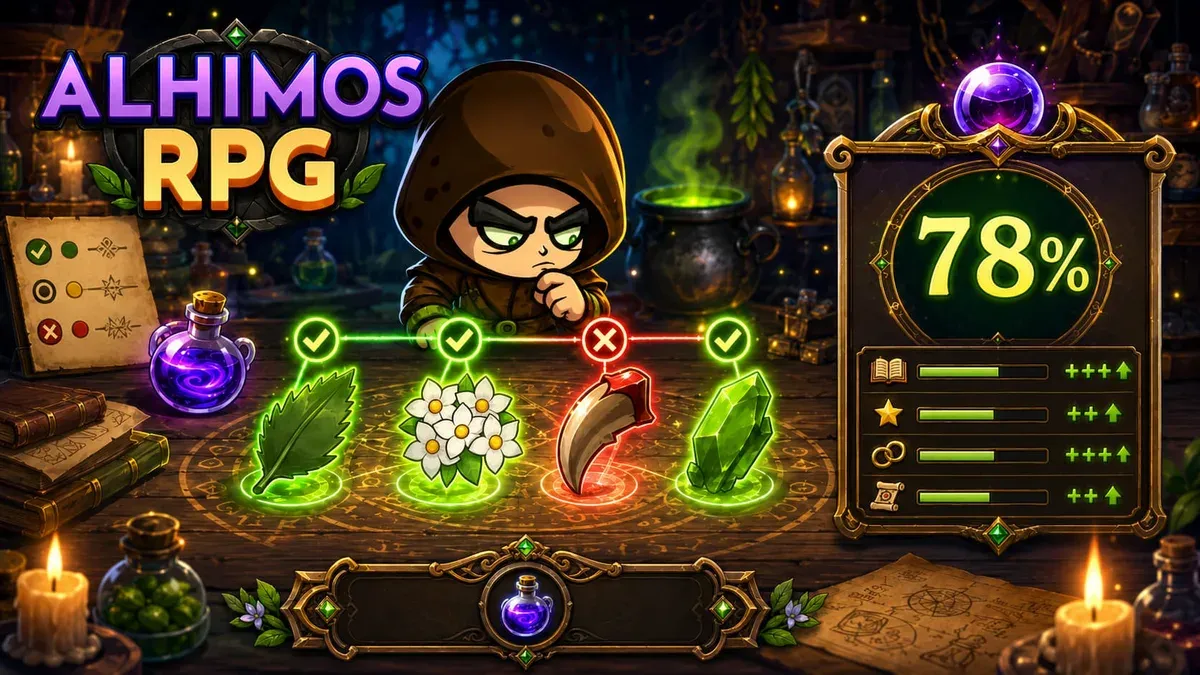
You take 2–4 ingredients and put them on the table. As you pick, the game shows whether they get along — compatible ingredients highlight green, clashing ones red. Every ingredient has an origin (plant, mineral, animal, magical, ethereal), and those origins have their own synergies and conflicts.
Before you brew, the table shows a success chance — a chance, not a guarantee. It weighs your alchemy level, the quality of the ingredients, how compatible they are, and whether you already know the recipe.
Discover it, keep it
Brew an unknown combination that works and the recipe opens up and goes into your book. From then on, knowing it gives you a better success chance, and that knowledge can’t be lost or taken.
And a failed brew isn’t a dead loss. Part of the ingredients come back as residue — a special ingredient you can put back to use. The more skilled you get, the more of it returns.
Ingredients come from the world
You don’t buy ingredients by the stack. You gather them across locations, and the longer you search an area, the better your odds. Each ingredient carries its own properties — anything from healing to damage. So your potion arsenal depends on where you’ve been and what you found.
Why it’s a chance, not a formula
I didn’t want brewing to collapse into a crafting calculator where the result is known before you start. Depth is the point — simplifying a system is only worth it when it removes confusion, not when it removes the interesting decision. The success chance keeps that decision in the loop: brew something you know and trust, or gamble on a new combination and see what comes out.
What’s next
This is the floor everything else stands on. Next I’ll get into potion stability — why the same recipe can be brewed reliable or “charged,” and why you’d ever choose charged. That’s where alchemy stops being crafting and starts being a gamble worth taking.